Chapter 1-2 Conversation (저는 닛차난입니다) – Speaking Pattern

Chapter 1-2 Conversation (저는 닛차난입니다) – Speaking Pattern

Welcome to the Chapter 1-2 Conversation 저는 닛차난입니다 lesson. In this comprehensive guide, we will master the essential speaking patterns for your self-introduction. This lesson is specifically designed for EPS-TOPIK students to help you communicate your identity—including your name, nationality, and occupation—clearly and professionally in a Korean workplace environment.

[TAGALOG] Maligayang pagdating sa lesson na ito ng Chapter 1-2 Conversation 저는 닛차난입니다. Sa gabay na ito, mag-fofocus tayo sa mga mahahalagang speaking pattern para sa iyong self-introduction. Ang lesson na ito ay dinesenyo para sa mga EPS-TOPIK students upang matulungan kayong magpakilala nang malinaw—kasama ang inyong pangalan, nationality, at trabaho—sa isang Korean workplace.


Today’s Master Pattern: I am [Noun] / Are you [Noun]?

Think of this as your “Professional Identity Formula.” In Korean society, especially in a factory or office, how you introduce yourself determines your first impression. Using the Chapter 1-2 Conversation 저는 닛차난입니다 pattern will make you sound more reliable and respectful to your supervisors (Sajang-nim) and colleagues.

[TAGALOG] Isipin mo na ito ang iyong “Professional Identity Formula.” Sa lipunang Korean, lalo na sa factory o opisina, ang paraan ng iyong pagpapakilala ang nagtatakda ng iyong first impression. Ang paggamit ng pattern na ito ay makakatulong para maging maganda, reliable, at magalang ang iyong dating sa iyong mga amo at kasama sa trabaho.


Detailed Dialogue Practice: Nitchanan and Carlo

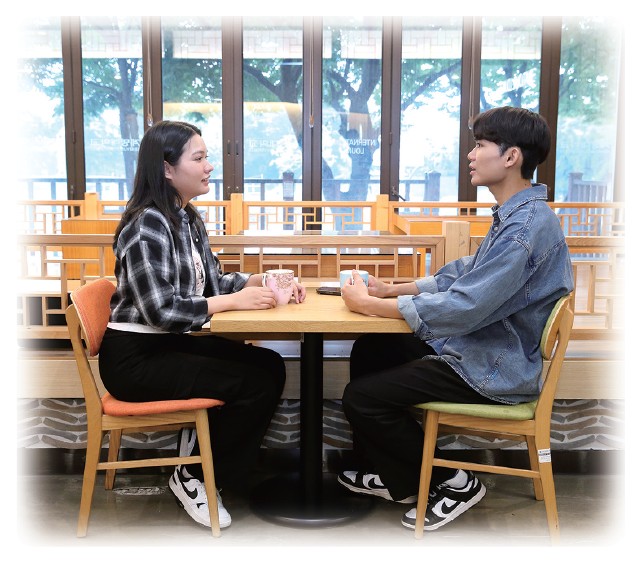
Let’s practice the dialogue in detail. Pay attention to how the speakers exchange information about their origins and jobs. Repetition is the key to success!

[TAGALOG] Mag-practice tayo ng dialogue nang detalyado. Bigyang-pansin kung paano nagpapalitan ng impormasyon ang mga speakers tungkol sa kanilang pinagmulan at trabaho. Ang paulit-ulit na pag-practice ay ang susi sa tagumpay!

Speaker A (Nitchanan): 안녕하세요? 저는 닛차난입니다. (an-nyeong-ha-se-yo? jeo-neun nit-cha-nan-im-ni-da.)
English: Hello? I am Nitchanan. / [TAGALOG] Hello? Ako ay si Nitchanan.

Speaker A (Nitchanan): 태국 사람입니다. (tae-guk sa-ram-im-ni-da.)
English: I am from Thailand. / [TAGALOG] Ako ay taga-Thailand.

Speaker B (Carlo): 안녕하세요? 저는 칼로입니다. (an-nyeong-ha-se-yo? jeo-neun kal-lo-im-ni-da.)
English: Hello? I am Carlo. / [TAGALOG] Hello? Ako ay si Carlo.

Speaker B (Carlo): 필리핀 사람입니다. (pil-li-pin sa-ram-im-ni-da.)
English: I am from the Philippines. / [TAGALOG] Ako ay taga-Pilipinas.

Speaker A (Nitchanan): 칼로 씨는 학생입니까? (kal-lo ssi-neun [학쌩임니까])
English: Carlo, are you a student? / [TAGALOG] Carlo, ikaw ba ay estudyante?

Speaker B (Carlo): 아니요. 저는 근로자입니다. (a-ni-yo. jeo-neun geun-ro-ja-im-ni-da.)
English: No. I am a worker. / [TAGALOG] Hindi po. Ako ay isang manggagawa.


Grammar Focus: Why use “-입니다” and “-입니까?”

In the Chapter 1-2 Conversation, we use the formal-polite ending -입니다. This is the most appropriate way to speak in professional settings. Even if you are talking to someone of the same age, using this pattern shows that you are a well-mannered person.

  • Statement: [Noun] + 입니다 (It is / I am)
  • Question: [Noun] + 입니까? (Is it? / Are you?)

[TAGALOG] Sa lesson na ito, ginagamit natin ang formal-polite ending na -입니다. Ito ang pinaka-angkop na paraan ng pagsasalita sa mga professional na sitwasyon. Kahit na ang kausap mo ay kasing-edad mo lang, ang paggamit ng pattern na ito ay nagpapakita na ikaw ay isang taong may magandang asal.


Interactive Quiz: Test Your Understanding

Try to answer these questions based on the Chapter 1-2 Conversation. This will help you retain the lesson better.

[TAGALOG] Subukang sagutin ang mga tanong na ito base sa ating lesson. Makakatulong ito para mas maalala mo ang iyong pinag-aralan.

  1. 닛차난은 어느 나라 사람입니까? (Where is Nitchanan from? / Saang bansa galing si Nitchanan?)
    Answer: 태국 사람입니다. (He is from Thailand.)
  2. 칼로는 학생입니까? (Is Carlo a student? / Estudyante ba si Carlo?)
    Answer: 아니요, 근로자입니다. (No, he is a worker.)

Teacher Nova’s Final Tip for Success

To master the Chapter 1-2 Conversation, you must practice speaking out loud every day. A very important phrase to remember is “잘 부탁드립니다”. While it translates to “Nice to meet you,” it literally means “I ask for your favor.” In Korea, this shows that you are ready to work hard and cooperate with others. Using this phrase at the end of your self-introduction will gain you a lot of respect!

[TAGALOG] Para ma-master ang lesson na ito, kailangan mong mag-practice magsalita nang malakas araw-araw. Ang isang napakahalagang phrase na dapat tandaan ay ang “잘 부탁드립니다”. Kahit na ang ibig sabihin nito ay “Nice to meet you,” ang literal na kahulugan nito ay “Inaasahan ko ang inyong tulong.” Sa Korea, nagpapakita ito na handa kang magtrabaho nang mabuti at makipagtulungan sa iba. Ang paggamit ng phrase na ito sa huli ng iyong pagpapakilala ay magbibigay sa iyo ng malaking respeto!


Learn Practical Korean Patterns with Teacher Nova!
Visit: knova.kr | Facebook: Nova’s EPS Korean

Source: HRD Korea Standard Textbook for EPS-TOPIK, simplified and rearranged by Teacher Nova.
[TAGALOG] Pinagmulan: HRD Korea Standard Textbook para sa EPS-TOPIK, pinasimple at inayos ni Teacher Nova.